
How the Blockchain Could Break Big Tech’s Hold on A.I.

Contents
SAN FRANCISCO — Pairing artificial intelligence and the blockchain might be what you would expect from a scammer looking to make a quick buck in 2018.
The two concepts, after all, are two of the most buzzed about and least understood ideas in the tech universe.
And the blockchain, the database design introduced by Bitcoin, has lately been the most popular route for anyone looking to raise money for an idea that sounds too good to be true.
Despite how easy the combination is to mock, the idea of applying the blockchain to artificial intelligence is attracting a growing roster of serious entrepreneurs and venture capitalists, many of them with impressive academic credentials.
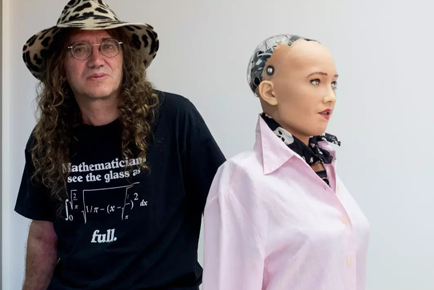
Dawn Song, a computer science professor at the University of California, and Ben Goertzel, the chief scientist at Hanson Robotics, have been among the big names arguing that the blockchain could be a crucial way to push back against some of the most worrying trends facing the field of artificial intelligence.
Many A.I. experts are concerned that Facebook, Google and a few other big companies are hoarding talent in the field. The internet giants also control the massive troves of online data that are necessary to train and refine the best machine learning programs.
Professor Song, Dr. Goertzel and other entrepreneurs say they believe the blockchain could encourage a broader distribution of the data and algorithms that will determine the future development of artificial intelligence.
“It’s important to have machine learning capabilities that are more under the user’s control, rather than relying on these big companies to get access to these capabilities,” Professor Song said in an interview.
The start-ups working toward this goal are applying blockchains in a number of ways. At the most basic level, just as the blockchain allows money to be moved around without any bank or central authority in the middle, artificial intelligence experts are hoping that a blockchain can allow artificial intelligence networks to access large stores of data without any big company in control of the data or the algorithms.
Several start-ups are setting up blockchain-based marketplaces, where people can buy and sell data.
Ocean Protocol, a project based in Berlin, is building the infrastructure so that anyone can set up a marketplace for any kind of data, with the users of data paying the sources with digital tokens.
Unlike Google and Facebook, which store the data they get from users, the marketplaces built on Ocean Protocol will not have the data themselves; they will just be places for people with data to meet, ensuring that no central player can access or exploit the data.
“Blockchains are incentive machines — you can get people to do stuff by paying them,” said Trent McConaghy, one of the founders of Ocean Protocol, who has been working in artificial intelligence since the 1990s.
The goal, Mr. McConaghy said, is to “decentralize access to data before it’s too late.”
Ocean is working with several automakers to collect data from cars to help create the artificial intelligence of autonomous cars. All the automakers are expected to share data so none of them have a monopoly over it.
